
12.2 The data handling cycle
|
Previous
12.1 Introduction and key concepts
|
Next
12.3 Developing questions
|
12.2 The data handling cycle (EMG6Q)
The process of data handling is summarised in the diagram below.
In this chapter we will go through all the steps in detail, and learn how to manage them correctly so that we end up with good, usable data.
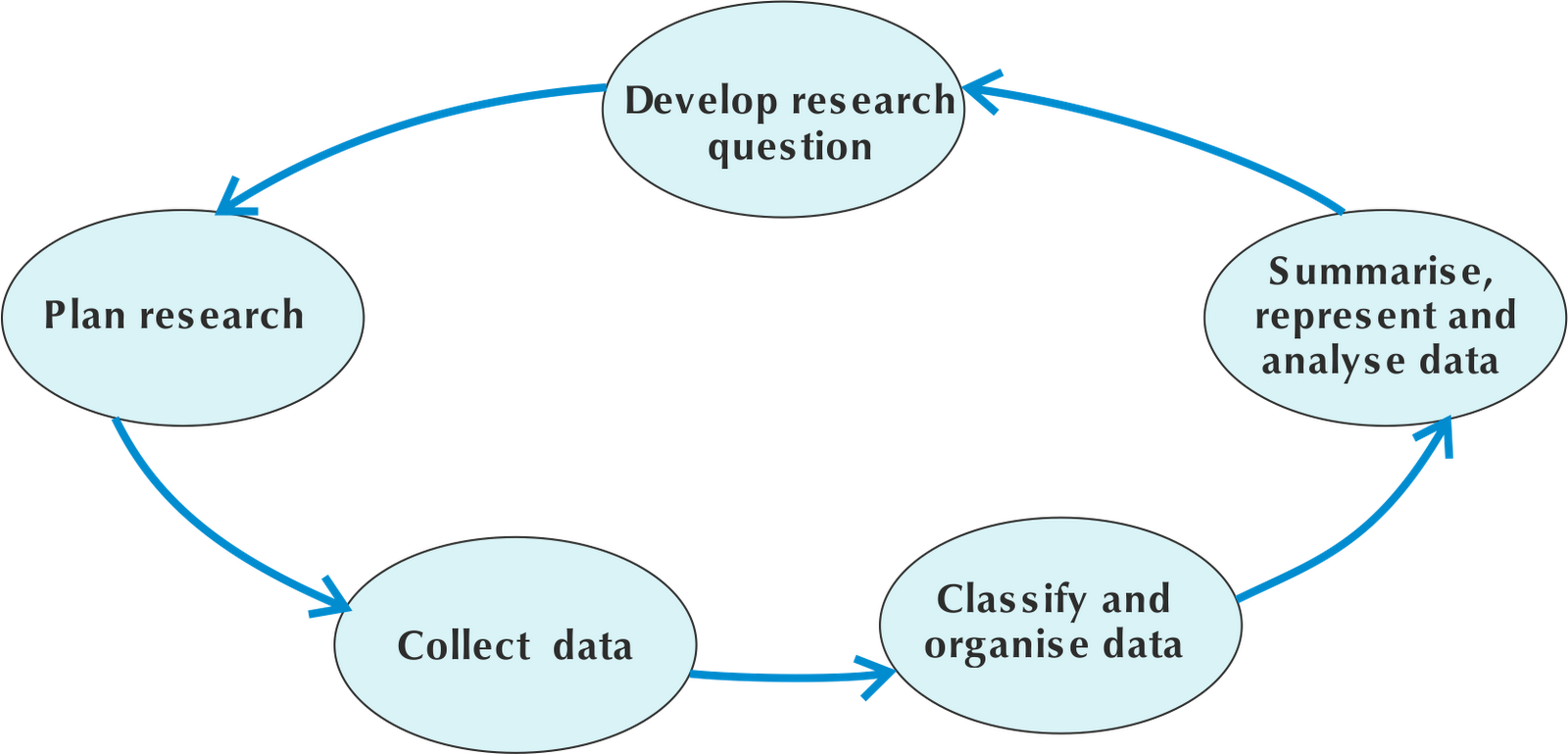
We represent the process of data handling as a cycle, because once we have analysed the results we may have new questions
- Research
- Studying a subject to uncover new facts.
The issue of bias and collecting valid data (EMG6R)
When we want to find information, we have to be very certain that we don't influence the process to get a certain kind of result. This doesn't only happen when people are trying to get a certain kind of result. In can also happen without you planning it. If you expect to see a certain result, you are more likely to see it! So at all the stages of collecting data, we must plan carefully to make sure that the data we get is valid.
- Valid
- In statistics, valid data means that the data represents the real world accurately.
|
Previous
12.1 Introduction and key concepts
|
Table of Contents |
Next
12.3 Developing questions
|