
9.2 Compression and rarefaction
|
Previous
9.1 Introduction and key concepts
|
Next
9.3 Wavelength and amplitude
|
9.2 Compression and rarefaction (ESACT)
However instead of crests and troughs, longitudinal waves have compressions and rarefactions.
- Compression
-
A compression is a region in a longitudinal wave where the particles are closest together.
- Rarefaction
-
A rarefaction is a region in a longitudinal wave where the particles are furthest apart.
As seen in Figure 9.2, there are regions where the medium is compressed and other regions where the medium is spread out in a longitudinal wave.
The region where the medium is compressed is known as a compression and the region where the medium is spread out is known as a rarefaction.
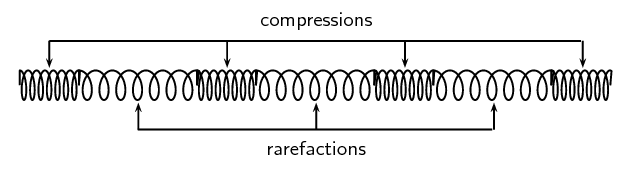
Figure 9.2: Compressions and rarefactions on a longitudinal wave
|
Previous
9.1 Introduction and key concepts
|
Table of Contents |
Next
9.3 Wavelength and amplitude
|