24.3 Transformations on the Cartesian plane
Types of transformations
A transformation is a rule that describes a change in the position, orientation or size of a shape. In this section, we look at four types of transformations:
- translations (slides)
- reflections (flips)
- rotations (turns)
- enlargements or reductions
- translation
- a sliding movement over a certain distance
- reflection
- a flipping movement over a certain line
- rotation
- a turning movement around a certain point
- enlargement or reduction
- increasing or decreasing in size
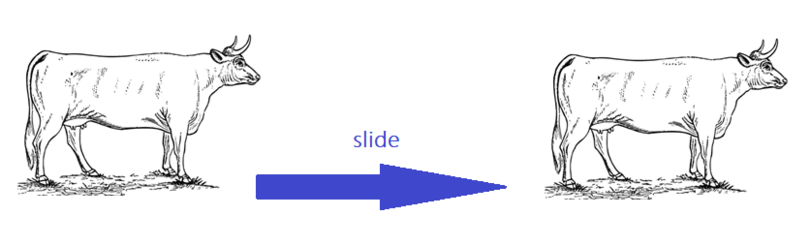
Translating a shape means sliding a shape from one position to another.
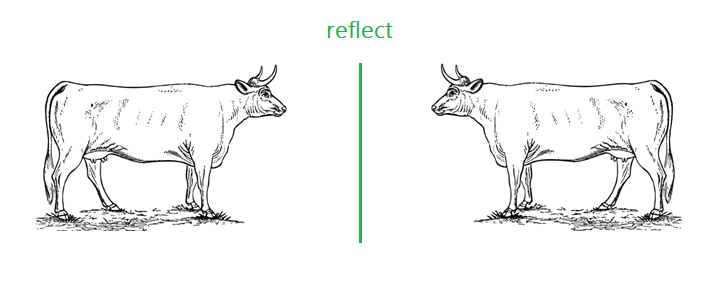
Reflecting a shape means flipping a shape over a certain line.
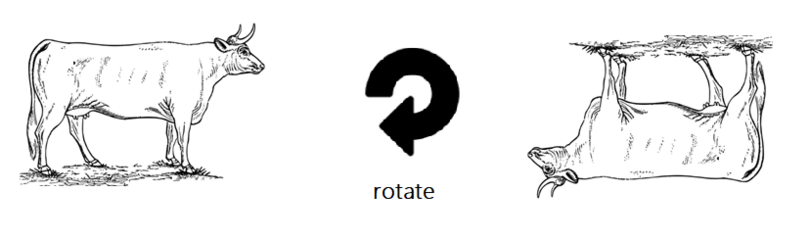
Rotating a shape means turning a shape around a certain point.
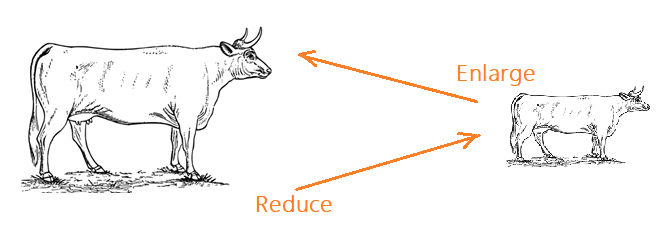
Enlarging a shape means making a shape bigger by a certain factor and reducing a shape means making a shape smaller by a certain factor. The value used to make a shape either bigger or smaller is called the scale factor.
- scale factor
- a ratio between the measurements of an object and the measurements of a representation of that object, where the representation can be bigger or smaller than the actual object